Case details split across paper, spreadsheets, and messages.
A case becomes the shared operational reference.
One moment / Route transition
The page is being assembled. Navigation remains available while the content catches up.
Product 02 / Dental operations SaaS
LabOS.
An in-development multi-tenant SaaS platform for connecting dental-laboratory cases, people, production, finance, and reporting under one tenant-aware system.
Enter the build dossier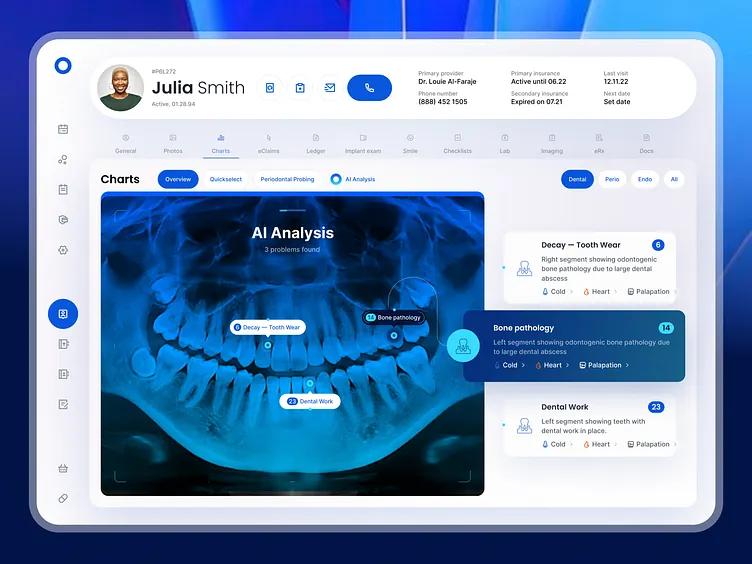
This exploration shows the intended product surface; it does not prove completed feature coverage.
Foundation work is active
Domain · modeling · engineering
Next.js · PostgreSQL · Prisma
Exploration image · no live tenant data
Build dossier starts here
The next chapters will inspect the dental-laboratory workflow, tenant boundary, authorization model, and the migration work that makes the platform safe to grow.
01 / Domain context
01 / DOMAIN MODEL
A dental laboratory coordinates cases, people, materials, deadlines, money, and communication at the same time. LabOS is being shaped around that operating reality instead of treating each record as an isolated feature.
Before / Product model
Fragmented work
LabOS direction
Case details split across paper, spreadsheets, and messages.
A case becomes the shared operational reference.
Staff knowledge and application access are treated as the same thing.
Staff records and application members remain separate, then can be linked deliberately.
Production state and deadlines require manual follow-up.
The product is designed to make ownership, stage, and next action visible.
Dentists, clinics, finance, and work history sit in separate contexts.
The domain model connects relationships to the work they create.
The connected domain
07 CONNECTED DOMAINS
The sequence is a product model and a design test: every new surface should preserve the organization context and clarify what happens next.
The unit of work: patient and restoration context, deadlines, notes, and history.
The relationships that originate work and give a case operational context.
People, responsibilities, and assignments—whether or not each person has an account.
Stages, queues, assignments, and delivery visibility across the work in progress.
Materials and stock movements connected to the work that consumes them.
Prices, payments, balances, and financial records protected by separate integrity rules.
Operational summaries that help a laboratory understand what needs attention.
02 / Trust architecture
02 / TRUST ARCHITECTURE
For a multi-tenant laboratory platform, the difficult question is not only what a user can see. It is which organization context, membership, permission, and resource policy must all agree before an action is allowed.
The trust path
Better Auth verifies the user and session.
Membership supplies the active tenant context.
A fixed role bundle is evaluated with default-deny rules.
The action is checked against the tenant-owned record and its policy.
The intended authorization path keeps authentication, membership, permission, and resource ownership distinct.
Authorization V1 / Decision records
ADR / 001—003
ADR-001
Active migration
The brief documents this as the current tenancy migration focus; production isolation results are not claimed here.
ADR-002
Authorization V1
The current brief names Owner, Admin, Manager, and Staff rules plus resource policies; it does not claim complete rollout.
ADR-003
Domain boundary
This separation is a stated product and architecture rule in the supplied LabOS brief.
03 / Evidence room
03 / ARTIFACT 001
LabOS has one public interface exploration today. It gives the product a visual direction; the registry below keeps the missing proof visible instead of filling the page with invented screens.
This artifact establishes the intended visual and information-density direction for LabOS.
Capture registry
01 AVAILABLE / 05 REQUIRED
A credible case study grows by capturing the states that explain the product’s trust model and day-to-day value.
Show the active tenant context and how a user knows which laboratory they are operating in.
Capture requiredShow the distinction between staff records, members, roles, and invitation lifecycle.
Capture requiredShow intake, assignment, production stage, deadline, and the next accountable action.
Capture requiredShow a safe allowed/denied state without exposing tenant or user data.
Capture requiredShow how shared domain records become a useful view for laboratory decisions.
Capture required04 / Engineering ownership
04 / ENGINEERING OWNERSHIP
LabOS is being evolved in migration slices: each replacement has to protect tenant boundaries, preserve domain history, and make the next change easier to reason about.
The migration path
The sequence keeps the platform reversible while the new rules become trustworthy enough to carry more of the product.
Classify existing server actions, tenant assumptions, and authorization paths before changing them.
Derive organization scope from verified membership instead of trusting a loose lab identifier.
Migrate invitations, membership lifecycle, and staff linking to the organization model.
Test allowed and denied paths, invariants, and legacy removal before widening the cutover.
What the engineering has to protect
A user must not reach another laboratory’s resources by changing an identifier in a request.
Knowing who a person is, which organization they belong to, and what they may do are separate decisions.
Invites, revocations, staff links, and departures need explicit rules that preserve history.
Ownership, financial mutations, and self-service actions need concurrency-safe behavior—not only a role check.
Where I contribute
My role spans the translation layer: observing how a laboratory works, modeling the business boundaries, engineering the system, and testing whether the rules hold when the happy path disappears.
Use first-hand dental-laboratory context to identify the handoffs and exceptions worth modeling.
Turn those realities into tenant-aware entities, membership boundaries, permissions, and resource policies.
Implement the Next.js, PostgreSQL, Prisma, Better Auth, and organization workflows in reversible slices.
Test isolation, lifecycle behavior, and denial paths before calling a foundation dependable.
05 / Current state
05 / CURRENT STATE
LabOS is under active development. The current focus is the platform layer that makes future dental-laboratory workflows safe to build on: organizations, tenant context, invitations, staff/member linking, and permission evaluation.
Product status
Under development / work in progress
The direction
The long-term opportunity is not another dashboard. It is one tenant-aware operating picture where cases, relationships, staff, production, inventory, finance, and reporting can reinforce one another.
Harden organization context, membership lifecycle, Authorization V1, and isolation testing.
The next credible proof is an authenticated, tenant-scoped workflow: switch organization, move a case, and show an allowed or denied action without crossing the boundary.
Connect inventory, finance, reporting, and notifications without losing tenant or permission clarity.
End of build dossier / Start of conversation
LabOS is the kind of product I want to keep building: domain-heavy, operationally real, and designed so trust is part of the experience—not a patch added after the interface.